
Hops The flowers of the Humulus Lupulus plant, a bine plant belonging to the Hemp family. The flowers of female hop plants (called hop cones) are egg-shaped and green in colour.
More than 1.200 years ago people started cultivating hops becaus of its benefits for health and more. Essential oils in hops give beer its fine bitterness and fresh fruity, flowery aroma and taste. People found out that beer brewed with hops had a longer shelf life than beers without hops. This is because hops has antimicrobial properties.
Hops were also used in herbal medicine. It makes you calmer and it is told to aid in situations of stress and insomnia.
Hops and health
Hops contain some polyphenols that have a positive effect on human health.
- 8-prenylnaringenine (hopeïne)
- Hopeïne is a plant-based phytoestrogen. This is a compound similar of structure with the female hormone estradiol and has similar effects on the human body as estrogen (1).
- Isoxanthohumol
- Isoxanthohumol is a prenylflavonoid, which is converted into hopeïne by flora in the human intestine (2).
- Xanthohumol
- Xanthohumol is only found in hops, not in any other plants. Most of the Xanthohumol is broken down during the brewing process, which makes the final concentration of it in beer or soft drinks low.
These polyphenols, together with alpha acids (cohumulon and adhumulon) and beta acids (lupulon, cohumulon and adlupulon) give hops the following properties:
- Antimicrobial
- According to lab research the polyphenols from hops have an antimicrobial effect agaubs gram-positive bacteria. The acids from hops also work antifungal (3).
- Anticarcinogen
- Polyphenols from hops are antioxidants. They prevent chemical reactions that can produce free radicals, thereby leading to chain reactions that may damage the cells of organisms. Research is done that proves high concentrations of polyphenols from hops can be used to fight tumors and cancer cells (4).
- Positive effect on lipid- and glucose metabolism
- Research (on mice) proves that hop acids play a role in the lipid metabolism. It aids in breaking down fats. Isohumulone (the active form of humulone) surpresses the PPAR-y protein, a protein responsible fot regulating the fatty acid storage and glucose metabolism. So hops are good against obesity, diabetes, atherosclerosis, and cancer (5, 6).
- Anesthetic, relaxing
- Hops have been used against stress and insomnia for a very long time. There is however not so much scientific proof for this property. As a herbal medicine in many cases hops are used in combination with lavender and valerian, all of which seem to have these positive effects (3, 7).
So are hops good for your health?
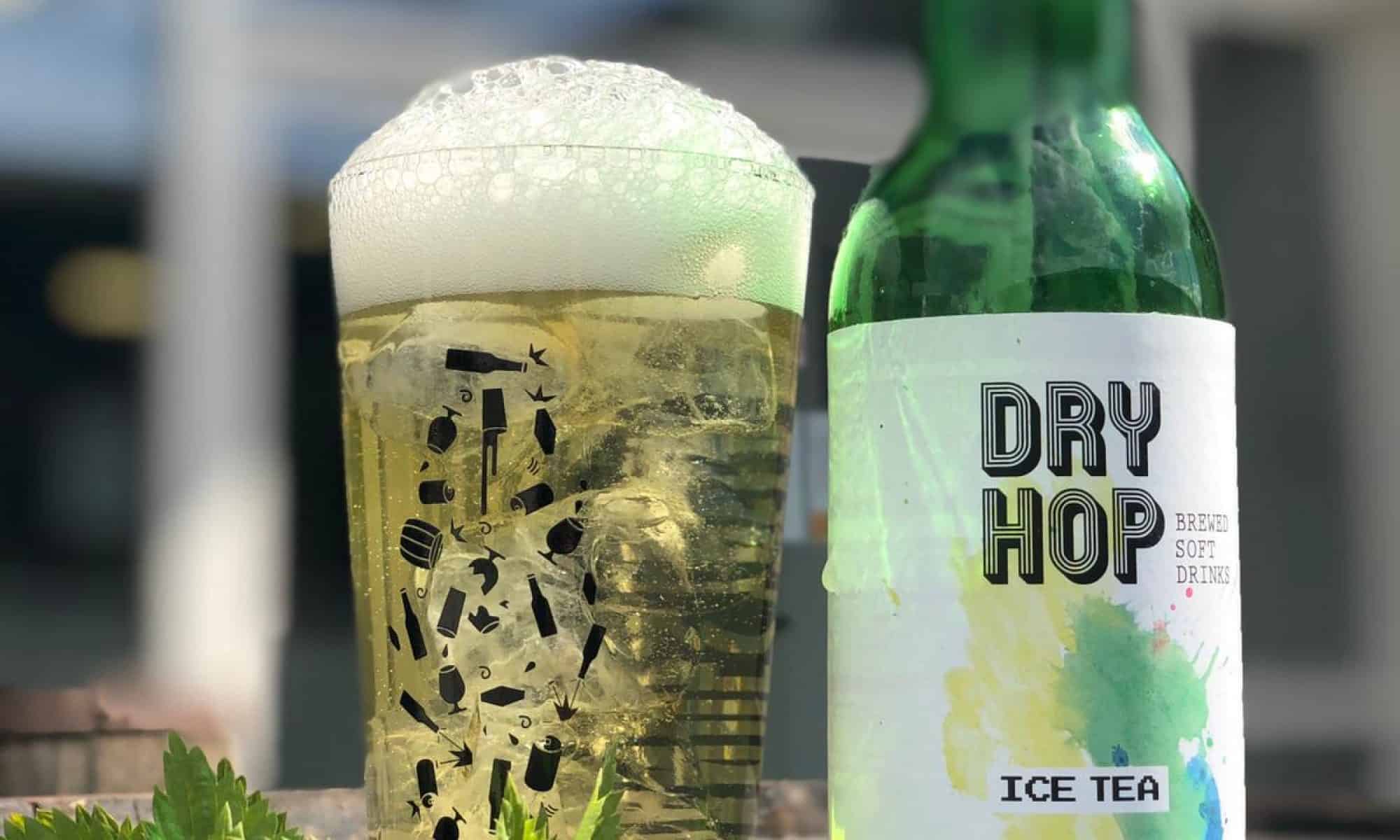
The acids and polyphenols in hops have the potential to positively influence your health. You would however need to drink lots of beer to get to the required concentrations to actually notice this. Drinking so much beer would be less positive for your health because of the alcohol content. That’s why drinking Dry Hop Soft Drinks is completely free of alcohol. Enjoy it as much as you want!
Sources
Text based on: https://www.kennisinstituutbier.nl/nieuws/hop-bier-gezond
- Possemiers S, Bolca S, Grootaerts, C et al. The Prenylflavonoid Isoxanthohumol from Hops (Humulus lupulus L.) Is Activated into the Potent Phytoestrogen 8-Prenylnaringenin In Vitro and in the Human Intestine. J NUTR 2006; 136:1862 – 1867
- Steven JF, Page JE. Xanthohumol and related prenylflavonoids from hops and beer: to your good health! Phytochemistry 2004; 65:1317 – 1330
- Zanoli P, Zavatti M. Pharmacognostic and pharmacological profile of Humulus lupus L. J Ethnopharmacol 2008; 116:383 – 396
- Sohrabvandi S, Mortazavian AM, Rezaei K. Health-Related Aspects of Beer: A Review. Int J Food Prop 2012; 15:350 – 373
- Yajima H, Ikeshima E, Shiraki M, et al. Isohumulones, bitter acids derived from hops, activate both peroxisome proliferators-activated receptor a and y and reduce insulin resistance. J Biol Chem 2005; 279:33456–33462.
- Miura Y, Hosono M, Oyamada C, et al. Dietary isohumulones, the bitter components of beer, raise plasma HDL-cholesterol levels and reduce liver cholesterol and triacylglycerol contents similar to PPARa activation in C57BL/6 mice. Br J Nutr 2005; 93:559–567.
- Cleemput M van, Cattoor K, Bosscher K de et al. Hop (Humulus lupulus)-Derived Bitter Acids as Multipotent Bioactive Compounds. J Nat Prod 2009; 72:1220 – 1230